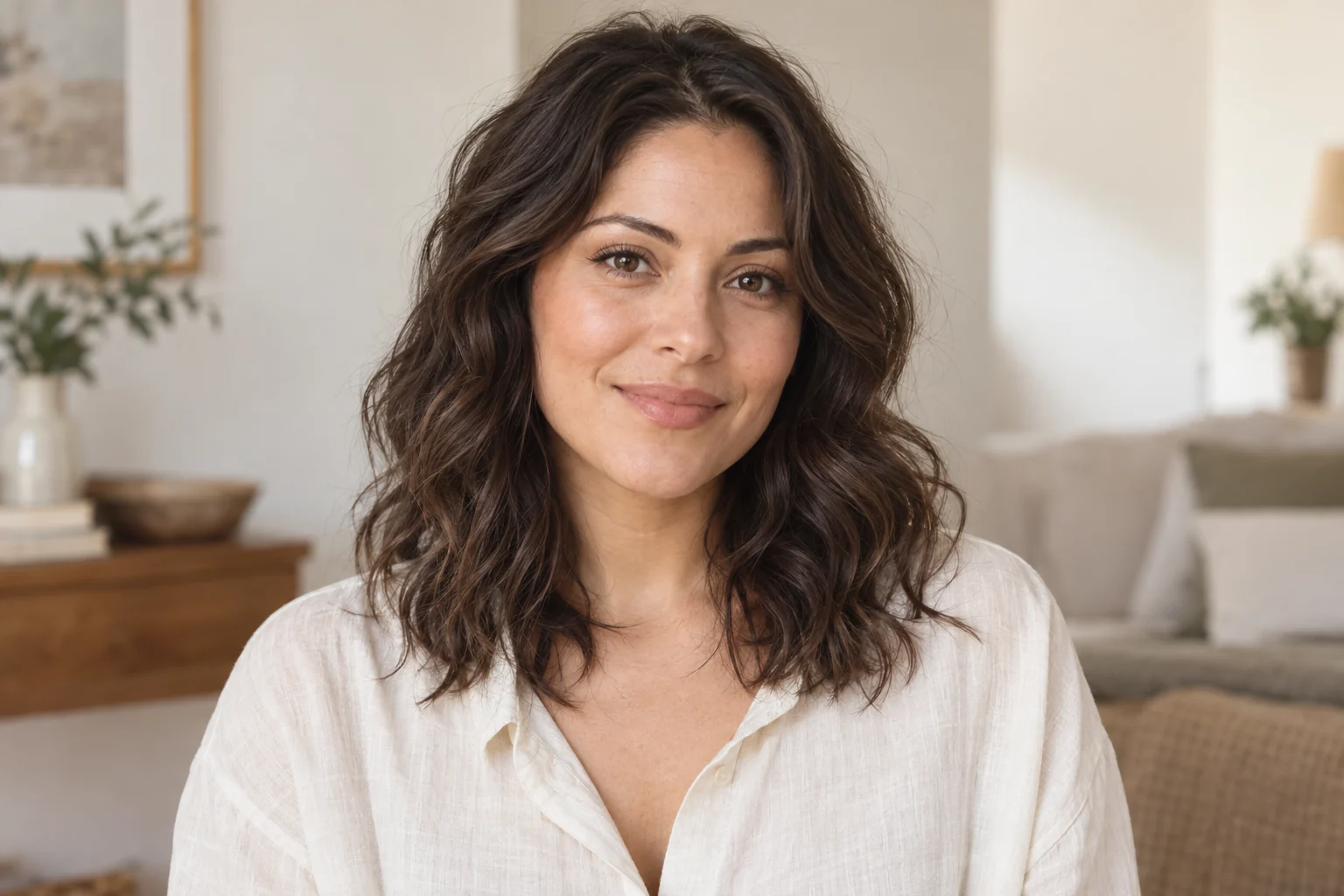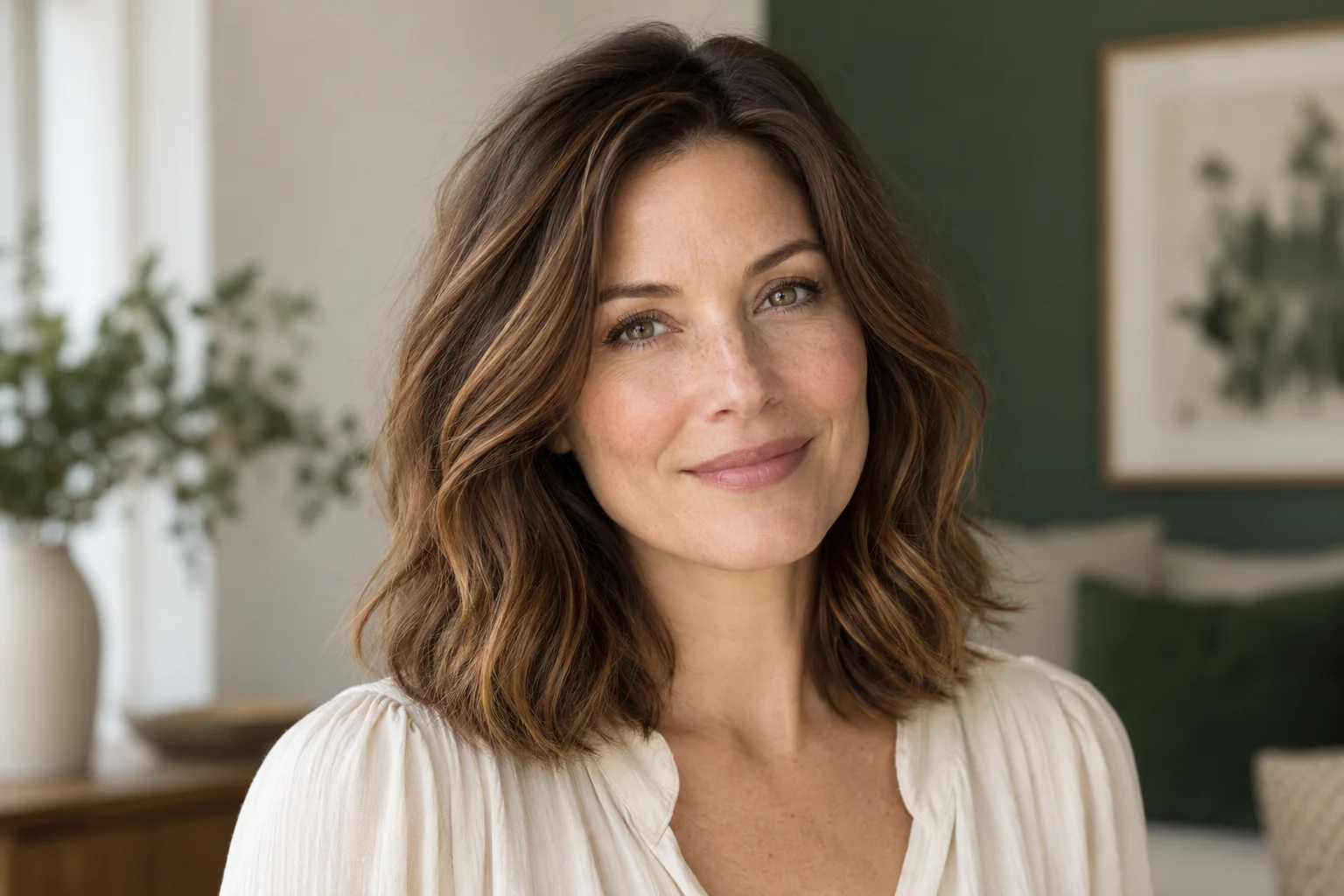
Turn a collection of pictures into a brief
A saved folder can contain several different ideas without you noticing: a jaw-length outline, a long fringe, a soft wave, and a color you love. The appointment is easier when you know which detail belongs to the haircut request and which is simply part of the photograph's appeal.
Before you arrive, choose a few images and add a short note to each. “This length,” “this open area around the eyes,” and “this overall shape from the side” are useful notes. You are giving the stylist a direction to discuss, not asking them to copy another person's hair exactly. An attractive reference can be the start of the conversation without being the final plan.
Bring evidence of your own ordinary hair
An old photograph of a haircut you enjoyed can be as useful as a new inspiration image. Add a recent photograph of your hair after your normal routine, especially if you are arriving with a very different finish. This helps keep the discussion connected to how you actually wear it.
Hottie Hair's description of its consultation process includes reference pictures and an assessment of texture, density, growth patterns, and condition. That is why your own starting point belongs in the conversation. Explain previous cuts that worked and those that did not, with a specific detail if you can remember it. “I could never keep the front tucked back” is more helpful than “I hated having short hair.”
Sources: [1]
Write down your non-negotiables
Choose the two or three requirements that really matter. They might be keeping a ponytail, avoiding a fringe, retaining a particular minimum length, or having a cut you can wear without an iron. A short list is easier to work with than trying to make every feature equally important.
Point to the minimum length in the mirror, and ask to see where the shortest sections would finish. “Only a little off” means different things to different people. You can also ask the stylist to explain the choice before adding extra shaping or removing more length. Clear boundaries make room for a useful professional recommendation without leaving your priorities uncertain.
Explain your routine in concrete terms
Think about a normal week, not your most carefully styled occasion. How often do you air-dry? Do you use a dryer but no brush? Do you wear your hair up for work? Do glasses, a helmet, or a headset affect how you arrange the front? Mention the details that reliably shape your day.
Reference-photo guidance from EMS Barbershop emphasizes matching the visual request to texture, growth pattern, and maintenance preferences. Although its examples concern barbering, that communication principle is useful for a salon haircut too. Ask which features in your image come from the cut and which require a particular finish. You can then decide whether that finishing work belongs in your routine.
Sources: [2]
Agree on upkeep and the price before starting
Ask what is included in the appointment you booked. If a substantial change, additional styling, or another service is suggested, request the price and expected time before agreeing. You do not need to know every salon term to ask for a clear explanation of the service.
Discuss grow-out as well as the first day. Ask which detail will change first and what the stylist would recommend if your next appointment is later than ideal. If the cut includes a fringe, ask whether it has a separate maintenance expectation. There is no single visit interval that suits every style, budget, or schedule, so make your own limits part of the brief.
Leave with instructions you can repeat
Before leaving, ask for the simplest version of the styling routine. Watch where the product is placed, which direction the hair is moved, and which steps are optional. If you can, repeat one small step yourself. Understanding the movement is more useful than taking home a list of unfamiliar products.
Save a photograph of the result and a short note about the agreed cut. At home, notice how it behaves after a few ordinary washes. Bring those observations to your next appointment. A clear request might be: “Keep this outline, but make the front easier to tuck away.” Each visit then builds on something concrete, rather than starting again with another large folder of inspiration.
Sources & editorial note
This guide brings together published hair education and practical questions for your stylist. It is not a first-person salon test or a promise of results.
- Hottie Hair: What Happens During a Hair Consultation?
- EMS Barbershop: How to Use a Haircut Reference Photo
Illustrations are AI-generated concepts. Hair appearance varies with texture, density, styling, and light. Read our editorial standards or suggest a correction.